Imagine every child moving through their early years knowing they come from people who crossed the largest ocean in the world – without maps or equipment, reading the ocean like a language.
In early April, this understanding sailed into a classroom in West Auckland.
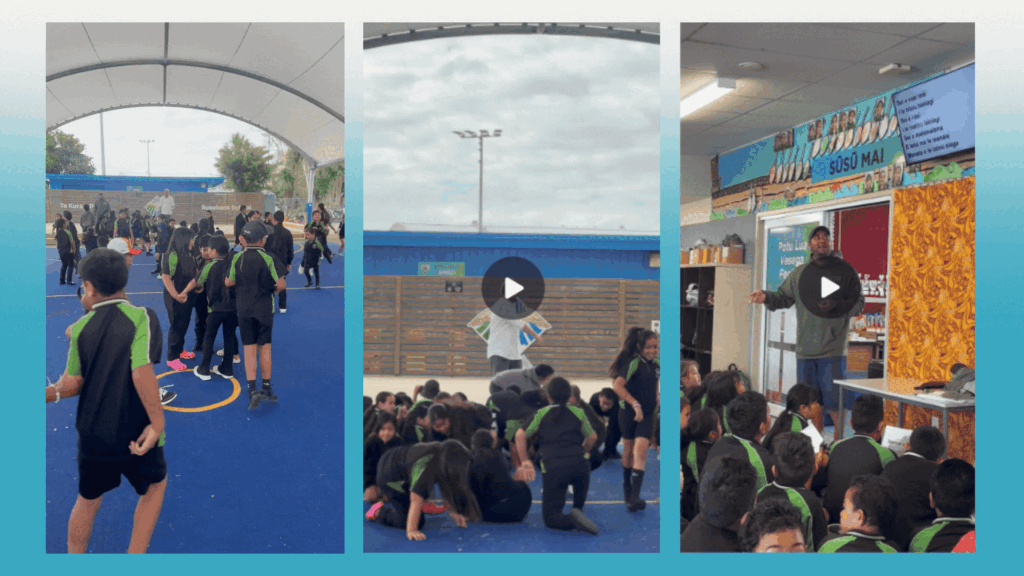
Eighty rangatahi from the Samoan and Niuean bilingual units at Te Kura o Pātiki | Rosebank School gathered for the first session of the Wayfinding Leadership series — a framework rooted in Pacific indigenous knowledge, developed by Chellie Spiller and Hotorua Barclay-Kerr, centred on identity and belonging through the concept of the vaka.
The session began in recognition: this was a room full of navigators. Children were invited to stand if they or their ancestors came from the Pacific Ocean. Then, to place a hand on their heart if there were people in their lives who helped them feel safe and strong.
“Pacific wayfinding has sustained aiga through generations — both in times of challenge and prosperity. Building on earlier work with Pātiki School and the Avondale community, we saw an opportunity to bring this knowledge into the classroom. Our role is to understand how this curriculum lands with tamaiti, and how we might create pathways for the experts in Pacific wayfinding to bring that knowledge directly to our young people.”
- Healthy Families Waitākere Systems Innovator, Christian Curtis
Through the parts of the vaka — the hulls as values, the crossbeams as connection, the tautai as the leader who notices — tamariki built a shared understanding of who they are, where they come from, and how they move as a collective.
The session closed with We Know the Way from Moana — a reminder that the knowledge is already there, and the journey is never made alone.
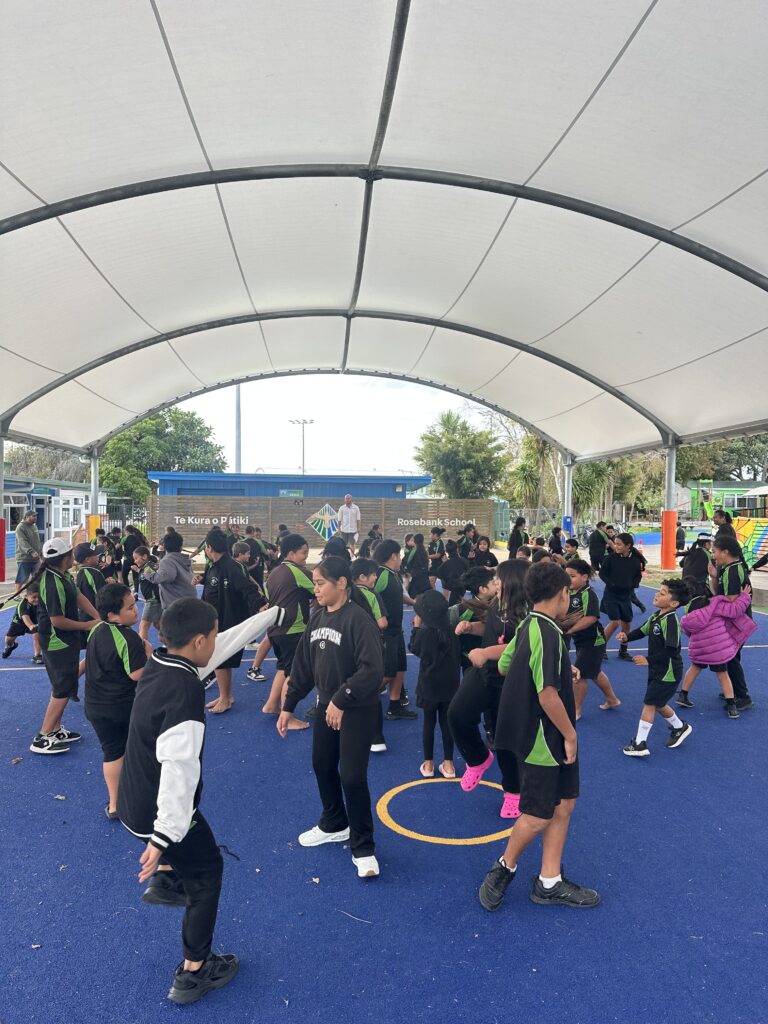
‘The Wayfinding Leadership approach, helps them open their eyes about their ancestors… it helps them explore who they are as a tautai in their family, their school and in their community’
- Toipua Schuster, Tupulaga mo a Taeao Team Leader at Te Kura o Pātiki
The children left energised, many going home to share what they’d learned with their whānau.
“My kids came home today telling me they had ‘the wayfinders’ in today. They were really keen to share what they’d learned.”
- Parent
Tamariki who engage with cultural activities in these years build stronger cultural identity, better health outcomes, and greater connection to school (here). Curtis continues.
“The conditions for lifelong health and wellbeing are shaped in the places we spend our time. Schools are where we can build the foundations that last a lifetime — and where we have the greatest opportunity to make sure those foundations are strong for every child.”
The Wayfinding series is ongoing, with the team currently reviewing insights and feedback to inform the structure of future sessions.